In the fast-paced industrial sector, choosing the right type of building structure is crucial for operational efficiency and long-term success. When it comes to building industrial projects like warehouses, factories, or manufacturing plants, companies often face the decision of whether to go with traditional construction methods or opt for Pre-Engineered Buildings (PEB). In this blog, we’ll compare PEB structures with traditional buildings to help you understand which option is better for your next industrial project.
What Are Pre-Engineered Buildings (PEB)?
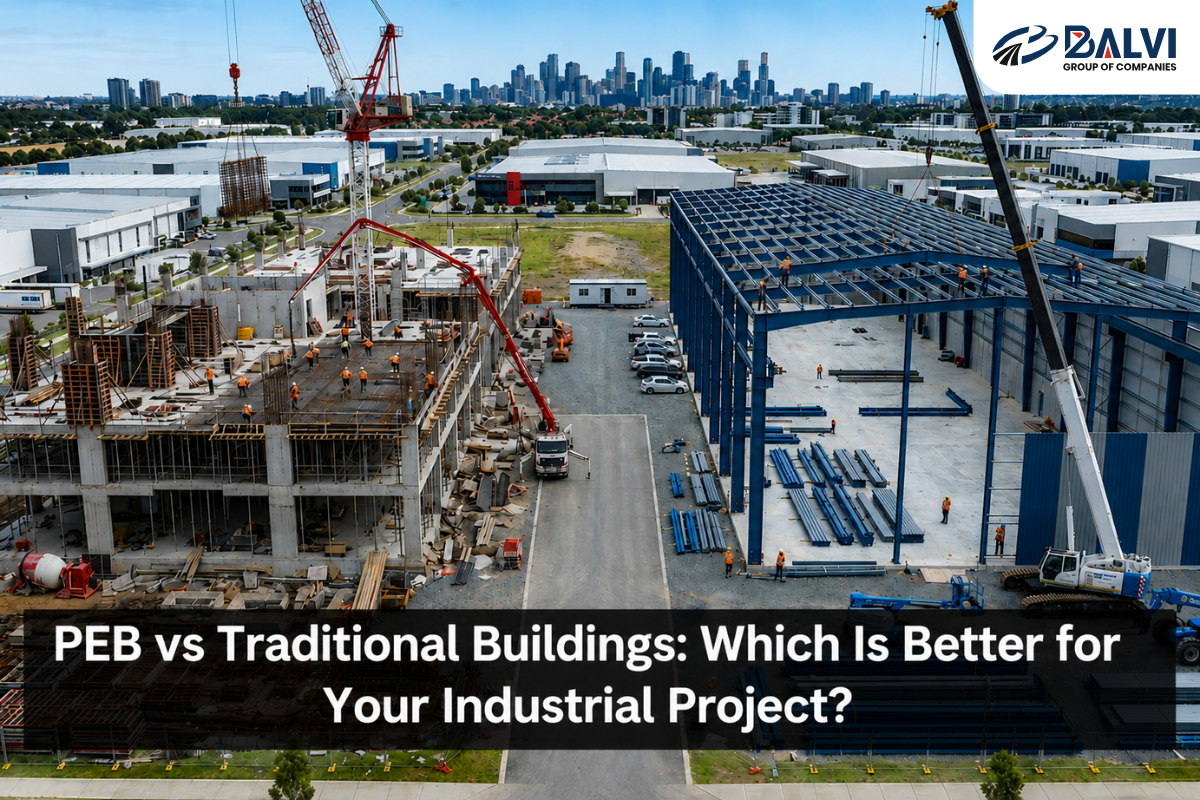
A Pre-Engineered Building (PEB) is a steel structure that is designed and fabricated in a factory and then assembled on-site. This contrasts with traditional construction methods, where materials are built and assembled on-site. PEBs are becoming increasingly popular in the industrial sector due to their speed of construction, cost-effectiveness, and design flexibility.
What Are Traditional Buildings?
Traditional buildings, on the other hand, involve building the structure entirely on-site using conventional materials such as concrete, brick, and steel. This method requires more on-site labor and can take longer to complete due to the number of processes involved, including material procurement, on-site fabrication, and assembly.
Key Differences Between PEB and Traditional Buildings
1. Construction Time
PEB structures offer faster construction times because many components are prefabricated in a factory before being transported to the construction site for assembly. The assembly process is much quicker compared to traditional building methods, where materials are manufactured and constructed on-site.
- PEB: Fast construction, reduces time by 40-50% compared to traditional buildings.
- Traditional buildings: On-site fabrication and longer construction schedules.
2. Cost Efficiency
Cost is always a concern in construction projects, and PEB buildings have a clear advantage here. Since much of the construction process happens off-site, PEBs reduce the need for on-site labor and minimize material waste, resulting in lower overall costs.
- PEB: Optimized steel usage, lower labor costs, and reduced material wastage.
- Traditional buildings: Higher labor costs and material waste.
3. Design Flexibility
One of the standout features of PEB structures is their design flexibility. Whether you’re constructing a warehouse, manufacturing unit, or industrial shed, PEBs can be customized to meet specific industry requirements, such as wide column-free spaces for machinery installation or temperature-controlled areas for sensitive materials.
- PEB: High customization based on industry needs (e.g., large column-free spaces, loading docks, insulated panels).
- Traditional buildings: More rigid in design and not as flexible for specific needs.
4. Durability and Strength
PEB structures are built to last. The steel used in PEBs is resistant to corrosion, able to withstand harsh weather conditions, and strong enough to handle heavy industrial loads. Traditional buildings, while also durable, can be prone to more maintenance issues, especially if the building is made with concrete or brick.
- PEB: Durable steel structures, resistant to corrosion and extreme weather.
- Traditional buildings: Can face more maintenance challenges over time.
5. Energy Efficiency
Energy efficiency is becoming increasingly important in industrial construction, and PEB systems provide excellent opportunities for energy-saving features. Many PEB buildings incorporate insulation panels, skylights, and natural ventilation, which reduce energy consumption by optimizing temperature control inside the building.
- PEB: Energy-efficient options such as insulation, skylights, and natural ventilation.
- Traditional buildings: Less energy-efficient without added features for temperature control.
PEB vs Traditional Buildings: Which Is Better for Your Industrial Project?
PEB Advantages for Industrial Projects
- Faster Construction: If you need to build a factory, warehouse, or manufacturing plant quickly, PEBs are the clear choice. The prefabricated components are ready to be assembled, reducing on-site construction time.
- Cost Savings: For businesses looking to stay within budget, PEBs offer a more cost-effective solution, thanks to reduced material wastage and faster labor.
- Customizable Design: Whether it’s a large industrial shed, a logistics warehouse, or a cold storage facility, PEBs provide customizable design features that cater to specific operational needs.
- Durability: PEBs are built to last, offering long-term strength and resilience in harsh environments.
When Traditional Buildings Might Be Better
- Complex Custom Design: In some cases, especially for unique or highly complex building designs, traditional construction methods may offer more flexibility.
- Local Regulations: Some regions have stricter regulations regarding the materials used in construction. In such cases, traditional buildings may meet these requirements more easily.
Conclusion
When choosing between Pre-Engineered Buildings (PEB) and traditional buildings for your next industrial project, the decision often comes down to your specific needs for time, cost, and customization. PEBs offer clear advantages in terms of speed, cost-efficiency, and design flexibility, making them ideal for industrial sheds, logistics warehouses, and manufacturing plants. However, traditional buildings might be better for highly specialized designs or in areas with specific construction regulations.
For most modern industrial projects, PEB technology will provide the most cost-effective, time-saving, and durable solution. If you’re considering building an industrial facility or warehouse, PEB is a smart investment that will help your business grow efficiently and sustainably.
Ready to get started on your next industrial project? Contact us today for expert advice and to explore how PEB solutions can help you save time and costs while building a durable, high-quality facility.